
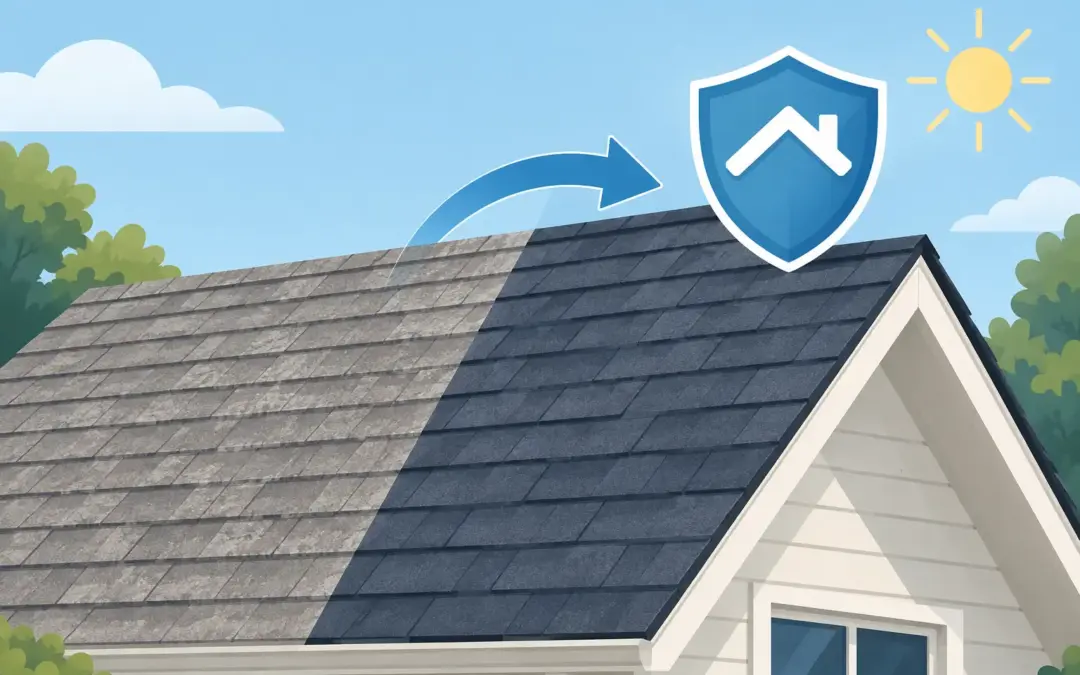
A faded roof can make an otherwise well-kept home look older than it is. But fading does not automatically mean replacement is the only answer. Shingle color restoration can improve the appearance of an aging asphalt shingle roof while addressing the weathering behind that dull, washed-out look.
The right solution depends on why the roof has changed color, how much life remains in the shingles, and whether the roof is structurally sound. When shingles are still intact but becoming dry, brittle, or worn at the surface, restoration may provide a practical path to renewed curb appeal and extended roof performance without the cost, waste, and disruption of premature replacement.
Why Asphalt Shingles Lose Their Color
Asphalt shingles are built to withstand years of sun, rain, wind, and changing temperatures. Over time, those same elements take a visible toll. Ultraviolet exposure dries the asphalt oils that help shingles remain flexible. Rain and wind gradually loosen protective granules. Algae, mildew, dirt, and airborne debris can create streaking or an uneven, tired appearance.
Color loss is often a signal of surface weathering, not just a cosmetic problem. The granules on a shingle help protect the asphalt layer from sunlight. As shingles age and become less flexible, they are more vulnerable to cracking, curling, and continued granule loss.
That is why a homeowner should look beyond the color alone. A roof with a few dark streaks may need professional cleaning. A roof that is broadly faded, dry, and showing early signs of aging may be a stronger candidate for treatment. A roof with widespread damage, active leaks, missing shingles, or failing structural components may require repair or replacement instead.
What Shingle Color Restoration Really Means
True shingle color restoration is not simply coating a roof with paint. Paint may change a roof’s surface color, but it does not restore the underlying flexibility of weathered asphalt shingles. It can also create concerns about adhesion, moisture management, and the appearance of the roof as the coating ages.
A restoration-focused approach starts with the condition of the shingle itself. The goal is to clean the roof, address biological staining where appropriate, and apply a treatment designed to replenish the oils weathered shingles lose over time. When the shingle becomes more flexible and conditioned, its natural color can appear richer and more consistent.
The visual improvement matters, especially for homeowners protecting resale value or simply wanting a home that looks cared for. The larger value, however, is preserving a roof asset that may still have useful life. A roof should not be replaced only because it looks aged if its condition supports a responsible restoration option.
The Difference Between Cleaning and Restoration
Roof cleaning and roof restoration can both improve appearance, but they solve different problems.
Cleaning removes surface contaminants such as algae, moss, dirt, and stains. It can make a roof look dramatically better when discoloration is primarily biological. Yet cleaning alone cannot replace the oils lost from asphalt shingles through years of weather exposure.
Restoration goes further by treating the shingle material after the roof has been properly prepared. This matters when a roof is clean but still looks faded, dry, or worn. Homeowners often find that the best result comes from a process that combines cleaning, restoration, and ongoing protection rather than treating each issue as unrelated.
Be cautious with aggressive cleaning methods. High-pressure washing can dislodge granules and shorten the life of an already vulnerable roof. A qualified professional should use methods suited to asphalt shingles and inspect the roof before recommending any service.
When Restoration Is a Smart Choice
Shingle restoration is most valuable in the middle stage of a roof’s life. The shingles may be visibly weathered, but the roof remains fundamentally sound. There are no major active leaks, widespread missing shingles, severe curling, or extensive bald areas where granules are gone.
A professional evaluation should examine flashing, penetrations, valleys, ridge areas, drainage, ventilation, and signs of moisture intrusion. Restoration is not a shortcut around necessary repairs. It is a maintenance decision for a roof that can still be preserved.
The financial case can be compelling. Full replacement is a major capital expense, often accompanied by noise, disruption, and landfill-bound tear-off material. Restoring a qualifying roof can cost substantially less while helping defer replacement until it is genuinely needed. It also gives homeowners a more sustainable way to care for an existing roof rather than discarding materials before the end of their functional life.
That does not mean every roof should be restored. Age alone is not the deciding factor. A younger roof with storm damage may need repair, while an older roof with sound shingles may be an excellent restoration candidate. Condition always leads the conversation.
How the Restoration Process Works
A dependable shingle color restoration process should be clear, controlled, and centered on roof condition. While methods vary by provider, a professional service generally follows four practical stages.
1. Inspect the Roof
The provider confirms that the roof is suitable for restoration and identifies repairs or concerns that must be addressed first. This protects the homeowner from investing in a treatment that is not appropriate for the roof’s actual condition.
2. Clean and Prepare the Surface
Organic growth, loose debris, and surface staining are treated using roof-safe methods. Proper preparation helps create a more uniform appearance and allows the restoration treatment to reach the shingle surface effectively.
3. Apply the Restorative Treatment
A trained applicator applies the treatment evenly across the roof according to established coverage and safety standards. Roof Shield uses a proprietary biodegradable treatment formulated to rejuvenate aging asphalt shingles at a molecular level, helping restore flexibility, reduce ongoing granule loss, and revitalize natural color.
4. Review the Results and Protect the Investment
After application, the provider reviews the work and explains what the homeowner can expect as the treatment settles. With a certified application, qualifying roofs may receive a five-year transferable warranty, offering added confidence for current owners and potential future buyers.
What Results Should Homeowners Expect?
The most visible result is often a richer, more even roof color. Faded gray, brown, black, and weathered tones can regain depth once the roof is clean and the shingles are conditioned. Results vary by shingle type, roof age, staining level, weather history, and the amount of existing granule loss.
Homeowners should expect improvement, not a manufactured new-roof appearance. Restoration works with the roof’s existing material and color. It does not erase physical damage, replace missing granules, or turn a worn architectural shingle into a brand-new product.
The performance benefit is equally important. By helping shingles regain flexibility, treatment can support their ability to handle normal thermal movement and changing weather conditions. That can help preserve the roof’s service life when restoration is performed at the right time.
A Better Conversation for Roofing Professionals
For roofing and exterior-service businesses, shingle color restoration creates a valuable alternative to the replacement-only conversation. Many homeowners want help but are not ready for a full reroof. Offering a credible restoration option allows contractors to serve that customer with a practical, lower-cost solution while building trust for future repair or replacement needs.
It also creates a differentiated service category. Rather than competing only on replacement estimates, certified applicators can offer a process built around inspection, preservation, visible transformation, and warranty-backed value. That means more ways to help customers, more opportunities from aging-roof leads, and a stronger reason for homeowners to choose a provider with specialized technology and training.
The strongest recommendation is always the honest one. If a roof needs replacement, say so. If it qualifies for restoration, explain the savings, the expected appearance, and the limitations clearly. That level of transparency turns a one-time project into a long-term customer relationship.
A faded roof does not have to be written off. With a thorough inspection and the right treatment, shingle color restoration can help a qualifying roof look better, perform longer, and stay out of the landfill before its time.